Sarah Sinn gives us a psychological analysis of “the dog” within horror movies!
Us horror fans usually have one thing in common: you can’t kill the dog. We all love our furry companions and our hearts ache when we see “man’s best friend” bite the bullet. It’s a big “no, no” when a horror movie takes the chance and takes the dog out. Kill as many teenagers and adults as you want, we’re here for that! We are here to watch gory, inventive, and graphic kills. But you can’t kill the dog … period.
For this article, I want to talk about a few “good boys” of horror. The dogs who are the heroes of the story, and fight tooth and nail to protect their humans. So, let’s dive into these “good boys” of horror and how they are heroes, protectors, bad asses and then I’ll dive in into what the dogs themselves represent, a psychological analysis of dogs within horror movies.
First, let’s talk about Beast from The Hills Have Eyes. He’s such a good boy.
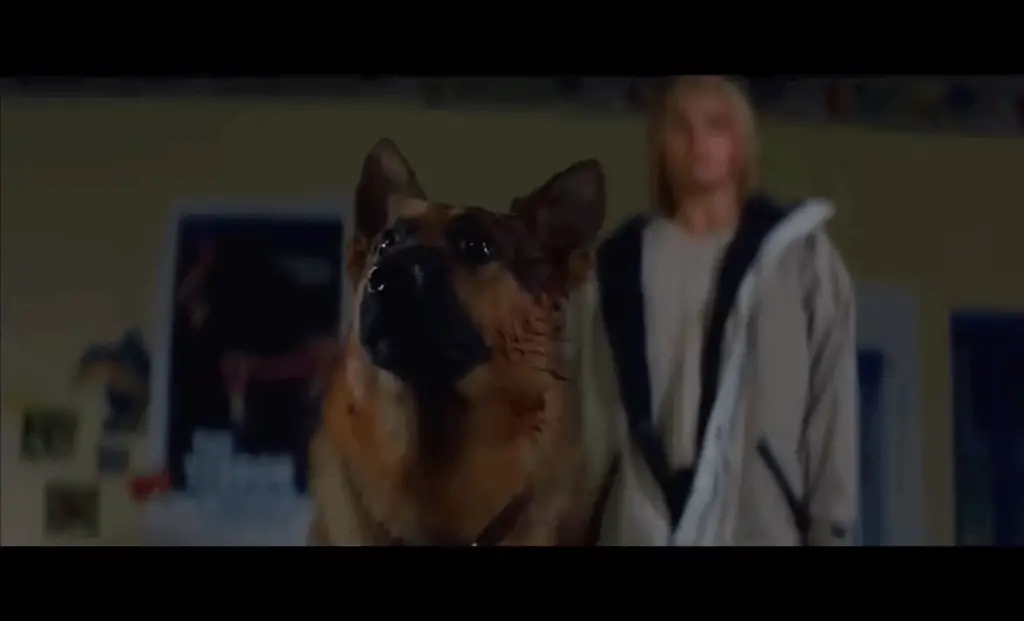
In both the original 1977 movie and the 2006 remake, Beast plays a big role as a hero. In both movies, his companion Beauty is killed by one of the hill people. In both movies, Doug brings Beast with him when he goes off into the hills to get his baby girl back that the hill people kidnapped. And Beast is a fighter, standing by Doug the whole way making sure to protect Doug and take out as many hill people as he can. In the original, he pushes Mercury off a cliff and attacks Pluto, and mauls him, killing him. In the remake, he takes out Big Brain, one of the hill people confined to a wheelchair. Beast doesn’t hesitate to kill these hill people, to protect Doug, help save the baby, and avenge the death of his companion, Beauty. Beast is a good boy through and through. He is an example of what a dog truly is: not a pet but a companion, a family member, an animal that has a spirit and a purpose.

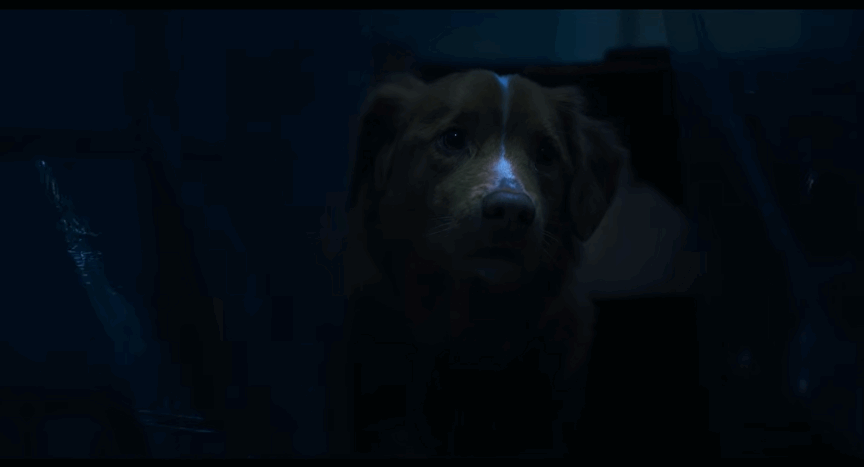
Let’s move on to Indy from Good Boy. This movie is entirely from the POV of the dog. Indy is a hero, good boy because he never leaves Todd, his companion, he stays by his side until the bitter end. When Todd moves him to a house in the middle of the woods that belonged to his grandfather, weird occurrences happen by a dark entity who seems heavily focused on Todd. Indy tries to his best to protect Todd from this entity, but Todd is also suffering from a crippling lung disease that is slowly taking him. But Indy isn’t going to let this dark entity take his Todd away from him. Indy does his best to warn Todd and fight this entity but the disease does eventually take Todd’s life but Indy still stayed by his side until the bitter end, making sure his companion wasn’t alone when he passed. Indy is a good boy, a hero because he protected Todd from the entity the best he could, but he couldn’t save him from his disease and Indy knew that. So, Indy did the only thing he could, stay by his side until he passed because he loved Todd and Todd loved him. Indy is also a good example of what a dog truly is: a faithful companion who never abandons his owner.
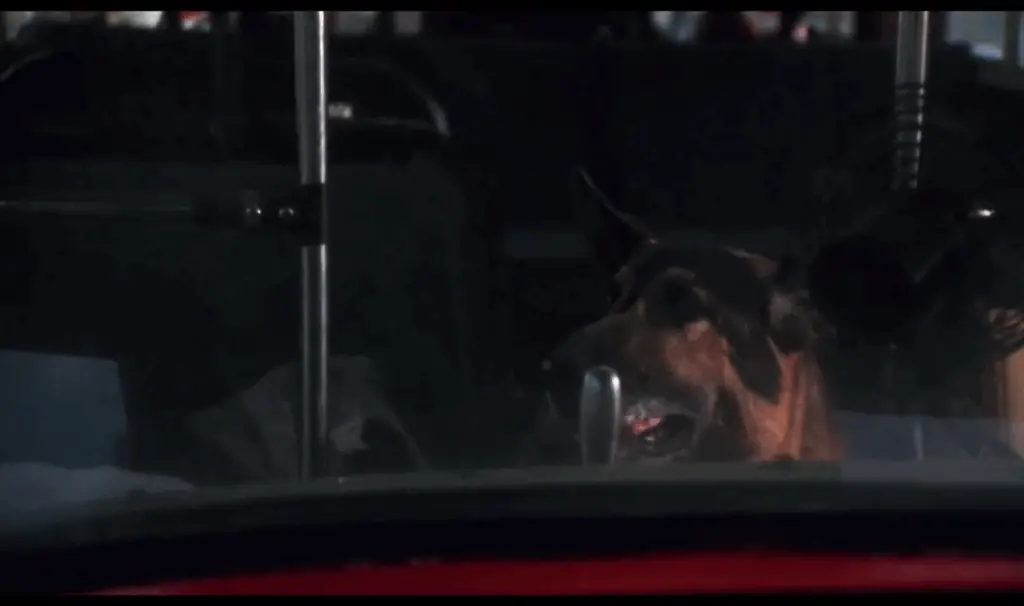
Last, I’d like to talk about my favorite good boy, hero dog of horror, Thor from Bad Moon. Thor takes on a werewolf to protect his family. A WEREWOLF! Janet is a single mom to a son, Brett. When Ted shows up to Janet’s after she invites him to stay on her property, Thor isn’t happy about it and Ted knows that Thor knows what he really is. Thor, being a good boy, tries to warn his family the truth about Ted and protect his family. After Janet follows Ted into the woods and sees him transform into a werewolf, Ted tries to attack Janet but Thor fights back. When Ted attacks Brett, Janet shoots him and Thor jumps onto Ted, knocking them both out of the window. The following morning, Thor finds human Ted in the woods and proceeds to attack him, killing him, saving his family. Thor took on a werewolf to protect his loved ones, not caring if he survived or not. Thor knew Ted was bigger and stronger than him, but he didn’t care. His job was to protect his family and that’s exactly what he did. Thor, to me, is the best good boy in horror. He is truly a good example of what a dog is: Protector of his family, risking his life to protect the ones he loves, a true warrior.
OK, after discussing all these good boys within horror, what do dogs within horror represent? Taking a deep dive, psychological analysis into what metaphors dogs within horror movies mean. First, let’s talk about attachment theory.
The four attachment styles are secure attachment (adults have healthy relationships, respectful boundaries, trust, and strong communication skills), anxious attachment (adults have a fear of abandonment, tends to be dependent on relationships to feel a sense of self-worth, and have a need for constant validation from others), avoidant attachment (have commitment issues, very self-reliant only depending on themselves, and don’t like to be vulnerable in any way), and disorganized attachment (have a fear of rejection, has a hard time trusting others, and tend to have low self-esteem, this one linked to childhood trauma). And I feel that dogs represent and are a good example of secure attachment. They form a bond with their owners, making great companions, forming a strong connection with them.
Dogs are attuned with their owners on an emotional level knowing when they are sad, in distress, or in danger and will be there for them and fight for them. Dogs are fiercely loyal, standing by their side no matter what and have full trust in their owners and their owners trust their animal companion as well, both knowing they have each other to lean on no matter what. Dogs in horror movies are a metaphor for secure attachment, representing trust, loyalty, strong connections with others, and healthy emotional attachment.
Second, let’s discuss the human psyche: id, ego, and how dogs represent a balanced psyche. The human psych is comprised of three parts; id (instincts), ego (reality), and the superego (morality). The id is our basic instincts (what we need for survival; eat, sleep, shelter, water, etc.), hidden desires, the pleasure principle, instant gratification, and is impulsive part of our psyche. The ego is rational, logical, problem-solving, reasoning, and what is socially accepted part of our psyche and is the mediator between the id and superego. The superego is our moral compass, sense of right and wrong, our conscience, and the sense of guilt part out or psyche. And I do believe that dogs in horror movies represent what it means to have a healthy, balanced psyche because dogs are all three things wrapped up into one adorable furball.
Dogs have a strong Id. They have great instincts when it comes to survival. They know what needs need to be met in order to survive, when to run, when to fight, when to hide, and when to protect others. Dogs have a strong ego. They are smart and see things for what they really are. They can think logically in order to survive and have problem-solving skills in order to figure out how to get that food on the table, how to escape a situation, where to go to save someone who is hurt, etc. And dogs have a strong superego. They are loyal and have full trust in others. They have a sense of right and wrong and will choose to do the right thing, to fight for the ones they love. They have a conscience because dogs do get upset when someone is upset with them and show remorse in their actions. Dogs can be used as a metaphor and represent a healthy, balanced psyche when we see them on the screen in a horror movie.
Last, let’s go over Maslow’s Hierarchy of Needs and how dogs represent and can be seen as a metaphor for self-actualization. As long as a dog’s physiological needs (food, air, water, and sleep) and safety needs (shelter, health, family stability, and security) are met then the dog has no problem moving into love and belonging needs (family, connections, friendships, and relationships), then esteem needs (confidence, trust, loyalty, and freedom), and finally self-actualization (acceptance, a sense of purpose, meaning, and self-fulfillment).
Same as a human. A human being must go through each stage of the pyramid is order to successfully become self-actualized. And dogs can be seen as a metaphor for this because all dogs need are their physiological needs and safety needs met in order to move through love and belonging needs, esteem needs, and to become self-actualize, understanding their purpose, why they were put on this earth, with this specific family. Dogs within horror movies can absolutely represent and be seen as a metaphor for someone who has successfully moved through Maslow’s hierarchy to become self-actualized. What it means to be self-actualized.
Us horror fans love our horror movies. But we don’t like it when our furry companions die in said horror movie. Kill as many humans as you want but leave our furry family members alone. There are many good boys within horror movies, such as Beast, Indy, and Thor, striving to be everything us humans want to be: loving, loyal, full of trust, and willing to fight tooth and nail to protect the ones we love. Dogs also represent positive aspects of what it means to be human.
Dogs in horror movies are a healing aspect. Horror is Healing.
Meet Sarah Sinn!

I currently live in Vermont, the state I was raised in, and I have a beautiful daughter named Hemera. I work full-time as the lead teacher of an infant room at a childcare center. Hobbies of mine are photography and cosplay (both me and my daughter). My signature cosplay is Herbert West (Re-Animator is my favorite movie) but I also cosplay as Tiffany Valentine, Quint from Jaws, Frank-n-Furter, Freddy, and soon I hope to show off my Kelly Meeker (from Halloween 4) cosplay I have been working on.
I am the host of Sinnful Sarah’s Horror Menagerie. A podcast where I dive deep, a psychological analysis to horror movies. I truly believe there is more to horror than what’s on the surface. Once you peel back those layers, there’s so much more going on. Horror is relatable. I believe that “horror is healing,” and can help many of us through various traumas and whatever life throws at us (it has helped me many times). I also believe that because there are so many subgenres within horror that everyone can enjoy the horror genre. They just have to find the subgenre that fits them. My personal favorite subgenre? Slasher flick. Give me a good ‘ol ’80s slasher any day.
I have an AA in Liberal Studies and Early Childhood Education and I graduated May of 2025 with a BA in Psychology. My goal is to pursue a Masters in the Psychology of Horror Movies. I want to teach at a University or film school. I want to educate people on the horror genre and show them that’s there more to these movies than just monsters, masked killers, gory kills, and final girls. Horror is healing, touches on Psychology and mental health issues, are social commentaries, reflect the fears of society (especially in the decade they were made in), are relatable, and most of all that horror is healing.
You can follow Sarah on X (the platform formally known as Twitter) at @SinnfulM and @Sinnful_redhead.